
Introduction to Part 2
In Part 1 of this thought leadership series, we examined the title, lien, tax, recording, and vesting risks that can affect home equity lending portfolios, particularly when loans are originated without a lender’s title insurance policy.
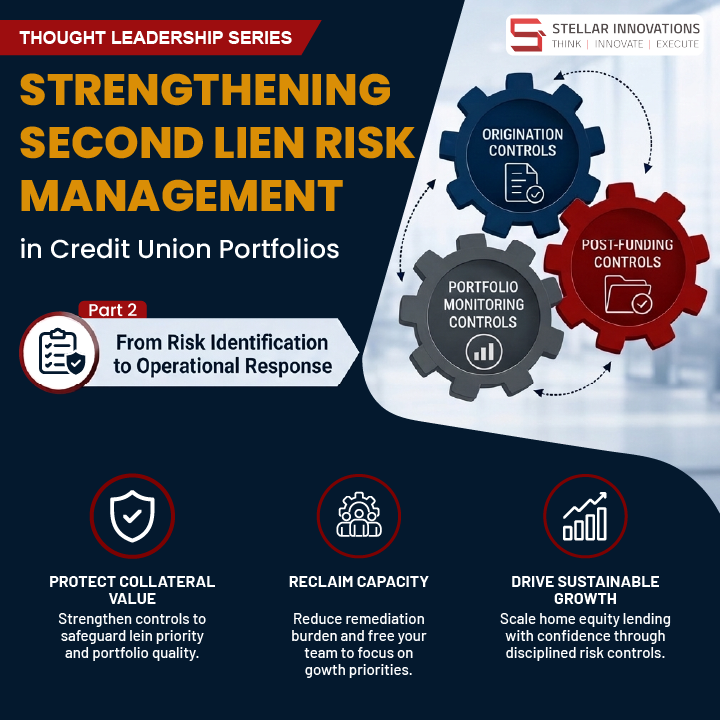
Part 2 shifts from risk identification to operational response. As home equity portfolios grow, credit unions need more than awareness of second lien exposure. They need structured controls that help prevent avoidable defects, reduce remediation burden, support audit readiness, and preserve internal capacity.
This section explores the operational cost of reactive risk management and how disciplined second lien controls, supported by strategic outsourcing, can help credit unions protect lien position, improve consistency, and scale home equity growth with greater confidence.
The Operational Drain of Reactive Risk Management
Many credit unions rely on internal post-closing teams to:
- Track lien releases
• Confirm subordination recordings
• Verify tax status annually
• Review legal descriptions
• Resolve documentation exceptions
• Manage trailing recordings
These functions are time-consuming and repetitive.
If a closing or post-closing employee earning $50,000 annually spends just 10% of their time curing second-lien documentation issues, the recurring payroll impact becomes significant.
Reactive risk management consumes:
- Payroll
• Management oversight
• Audit preparation time
• Operational capacity
Prevention contains cost.
Remediation compounds it.
The Financial Cost of Inaction
Without structured controls, institutions risk:
- Lien priority disputes
• Impaired second lien recoveries
• Audit findings
• Regulatory scrutiny
• Increased reserve pressure
• Delayed enforcement actions
Documentation gaps that go undetected for months or years can significantly weaken a second lien position.
A Structured Second Lien Risk Control Framework
Home equity portfolios require layered risk controls that mirror the discipline applied to first mortgage lending, even without title insurance coverage. Third party title validation adds a second set of experienced eyes to identify lien, vesting, and recording issues before they become costly post-closing problems.
Origination Controls
- Property report validation
• Judgment and lien verification
• Tax status confirmation
• Legal description validation
• Subordination review prior to funding
Post Funding Controls
- Release tracking
• Subordination recording confirmation
• Recording verification
• Legal description confirmation
Portfolio Monitoring Controls
• Annual tax status verification
• Targeted lien research when first liens refinance
• Curative research on exception files
Reclaiming Time and Operational Capacity Through Strategic Outsourcing
Lien release tracking, tax verification, recording confirmation, legal description review, and targeted curative research are repetitive and process driven.
When managed entirely in house, they create:
- Recurring payroll expense
• Capacity bottlenecks
• Backlog exposure
• Diverted focus from growth initiatives
Strategic outsourced support for defined post-closing and monitoring functions allows institutions to:
- Convert fixed labor expense into variable per file cost
• Improve consistency in lien verification
• Monitor taxes
• Free internal staff to focus on lending and member service
• Shift defined exposure from balance sheet volatility to structured indemnity - Direct communication with the title plant
In many cases, verification, curative, and indemnity services cost less than one internal labor hour, offering a cost-effective alternative to in-house remediation.
Institutional Impact
When structured second lien controls and strategic outsourced support are implemented, credit unions can:
- Protect lien priority
• Reduce impairment risk
• Improve audit readiness
• Lower recurring post-closing labor expense
• Strengthen regulatory posture
• Increase confidence in Home Equity portfolio growth
Operational capacity recovered from exception management can be redirected toward production, member experience, and strategic expansion.
In a constrained staffing environment, reclaimed capacity is a strategic asset.
A Leadership Question
As home equity portfolios expand, leadership must ask:
Are we scaling second lien growth with structured risk discipline,
or absorbing preventable remediation expense and exposure?
Second lien risk without title insurance is institutional risk.
Reclaiming time, capital, and operational capacity begins with strengthening controls and intelligently allocating the labor required to support them.
Conclusion: Key Takeaways
Home equity growth presents an attractive opportunity for credit unions, but the opportunity must be matched with disciplined second lien risk controls. With credit union loan balances expanding, HELOC usage rising nationally, and many home equity loans originated without lender’s title insurance, institutions that rely only on reactive exception management may absorb avoidable cost, delay, and collateral impairment.
- Home equity exposure is growing, making lien priority, tax monitoring, and recording accuracy more important to portfolio performance.
- Title defects can directly affect recovery, legal expense, reserve pressure, audit readiness, and borrower-service capacity.
- Preventive controls at origination, post-funding, and portfolio monitoring are more cost-effective than delayed remediation.
- Strategic outsourcing can convert recurring internal labor burden into defined, scalable, per-file support while improving consistency.
- The strongest institutions will scale home equity growth with the same collateral discipline they apply to first mortgage lending.
For credit union leaders, the central question is not whether home equity lending can grow; it is whether growth can be supported with controls that protect lien position, preserve operational capacity, and reduce preventable loss exposure.
This is Part 2 of a two-part thought leadership series on managing home equity risk exposure in credit union portfolios. Part 1 examined why title and lien controls matter as home equity lending grows, including the risks associated with unreleased liens, missed judgments, tax delinquencies, recording errors, and vesting defects.
Part 2 focused on the operational side of risk management: how reactive remediation can consume staff time, increase costs, create audit exposure, and divert internal teams from
lending and member service priorities. By implementing structured origination, post-funding, and portfolio monitoring controls, credit unions can reduce preventable risk while improving consistency and operational efficiency.
For credit union leaders, the takeaway is clear: sustainable home equity growth requires more than loan demand. It requires disciplined second lien controls that protect collateral value, preserve operational capacity, and support long-term portfolio performance.
Part 1 of this series is available on Stellar Innovations Part 1: Managing Home Equity Risk Exposure in Credit Union Portfolios: Why Title and Lien Controls Matter – Media – Stellar Innovations.
A Strategic White Paper
David J. Olson
VP – Marketplace Solutions
david.olson@stellaripl.com